

The accuracy of a patent application is paramount, making patent proofreading a vital final check. New AI-powered tools are reshaping this process. Ankar, a London-based AI platform from ex-Palantir engineers, focuses on patent drafting and intellectual property management. This analysis evaluates Ankar’s capabilities specifically for patent proofreading by comparing it to dedicated tools.
Ankar accelerates initial patent drafting by an estimated 60% but does not offer a dedicated proofreading module. It lacks specialized features like antecedent checking and style rule enforcement found in tools from companies like Patent Bots or Solve Intelligence.
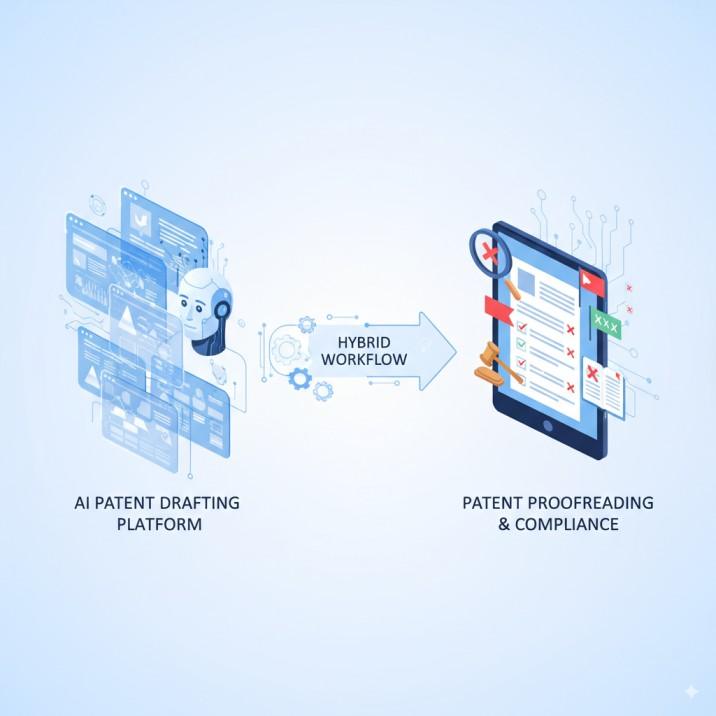
Consequently, the recommended workflow is a hybrid approach: use Ankar for rapid drafting, then export to a dedicated tool for final quality control. This method can reduce total patent preparation time from a typical 10–13 hours to just 4–6 hours, all while maintaining high accuracy.
Understanding Ankar: Background and Vision
Ankar is a London-based, AI-native patent platform established in 2024 by a team of former Palantir engineers. The company’s experienced founding team aims to provide end-to-end support for the full IP lifecycle. This includes the discovery of ideas, drafting claims and specifications, novelty mapping, freedom-to-operate (FTO) analysis, and generating patent filing outputs.
The platform emphasizes automating manual tasks in patent prosecution. The goal is to save time and reduce costs for inventors, R&D departments, and in-house patent teams. Ankar’s growth potential has attracted significant seed funding, indicating strong investor confidence and investment interest in its technology. The company positions itself as a central operating system of innovation, designed to replace the need for multiple disparate tools.
What is Patent Proofreading and Why It Matters
Patent proofreading is a detailed technical and legal examination of a patent draft before filing. This process confirms that claims have a proper antecedent basis, consistent numbering, and correct claim dependencies. It involves checks to confirm that figures and descriptions match, terminology accuracy is maintained, and no unsupported claim language is present.
The process also verifies compliance with specific filing office rules, such as those from the USPTO or EPO, along with formatting requirements and style guidelines. A report from the European Patent Office notes that a large number of applications face delays due to formal errors. Preventing these critical mistakes is essential, as they could lead to rejections or weaken the patent’s enforceability. Unlike generic proofreading, it requires a deep understanding of patent law conventions, where small typographical errors can have major legal consequences.
Read more Articial on this topic
Patent Proofreading Features in Dedicated Tools
Dedicated patent proofreading tools are built with automated checks tailored to patent rules. Solutions from providers like Patent Bots and Solve Intelligence offer live feedback on common, patent-specific errors.
Key features of these AI tools include:
- Flagged antecedent basis errors.
- Diagram and figure reference checks.
- Automatic claim dependency validation.
- Tracked changes, redlining, and compliance warnings to streamline collaborative review.
- Style rule enforcement for specific jurisdictions, confirming final documents meet office requirements.
These proofreading tools function as a quality gate after drafting and before submission, improving proofreading efficiency.
Ankar’s Core Patent Drafting and Analysis Capabilities
Ankar’s platform is highly effective for early-stage patent drafting and analysis. Its core capabilities represent a significant step forward in patent automation.
- AI-Powered Patent Drafting: The system generates structured patent drafts from invention disclosure documents, which can cut initial drafting time by approximately 60%. This AI-assisted drafting helps create a solid foundation quickly.
- Prior Art & Novelty Mapping: Ankar cross-references innovations against a database of global patents. This prior art search helps identify novel aspects and avoid overlaps with existing intellectual property.
- Freedom-to-Operate (FTO) Analysis: The platform rapidly assesses if a new product might infringe on existing patents. This automated analysis saves weeks of manual search time.
- Claims and Specification Structuring: Ankar uses structured templates and AI suggestions to organize claims hierarchies and technical descriptions, including a structured claim tree.
- Portfolio Insights: It provides portfolio analytics for patent portfolios, highlighting whitespace or redundant claims.
Overall, Ankar streamlines the creation of clean draft documents, focusing on content generation rather than final proofing.
Does Ankar Include Patent Proofreading Functionality?
Ankar does not currently offer a dedicated patent proofreading module as part of its patent intelligence platform. While its structured templates reduce early drafting errors, it lacks the fine-grained, micro-level checks expected in a final proofreading phase.
For example, the platform does not automatically flag missing antecedent references or enforce specific formatting rules required by the USPTO. There is no built-in feature for tracked changes or a version history to support detailed feedback loops, which are standard in professional proofreading tools. Any format or style checks within Ankar are template-based rather than active validation during the editing process. The platform generates a solid draft but leaves final quality assurance framework checks to other tools or manual review.
Strengths of Ankar in the Patent Workflow
Ankar provides considerable efficiency and quality improvements during the early stages of patent development.
- Speed: AI-powered patent drafting can reduce initial document creation from days to just hours.
- Innovation Mapping: The system automatically highlights gaps or overlaps in claim scopes, helping to refine patent application drafts.
- Simplicity: It streamlines the invention disclosure drafting process by converting notes and slides into structured drafts.
- Formatting Outputs: The platform exports audit-ready documents in clean formats compatible with major patent offices.
- Strategic Insights: Ankar offers quick analytics for FTO and risk, informing better decision-making for in-house counsel.
These strengths improve the quality of initial drafts and save research time, addressing different needs than those met by proofreading.
Limitations of Ankar for Patent Proofreading
When evaluated for its patent proofreading capabilities, Ankar shows noticeable gaps.
- No Structural Error Detection: Missing or inconsistent claim references can go unnoticed.
- Lack of Compliance Checks: The platform does not enforce examiner-style rules or other regulatory requirements.
- No Redlining/Tracking: It cannot track edits or comments, which complicates collaborative review and revisions.
- Terminology Enforcement: The system does not automatically flag inconsistent terminology or conflicting definitions.
- Jurisdictional Gaps: There are no built-in presets for different patent office formatting or language requirements.
Ankar cannot fully replace the manual and legal proofreading processes that ready an application for patent filing.
Comparison: Ankar vs. Traditional Proofreading Tools
A side-by-side comparison highlights the distinct roles these AI-driven solutions play.
| Feature | Ankar | Dedicated Proofreading Tools |
| Error Flagging | No automated antecedent checks | Detailed error detection |
| Formatting Rules | Generic templates only | Active enforcement of USPTO/EPO style |
| Collaboration | Basic editing capabilities | Tracked changes, comments, version history |
| Terminology | AI suggests wording | Alerts for inconsistent terms |
| Figures/References | No automated figure-reference links | Highlights mismatched figure callouts |
Dedicated proofreading solutions offer detailed checks that complement Ankar’s broad drafting capabilities.
Optimizing Patent Workflow with Ankar
A hybrid workflow combining Ankar with proofreading tools offers the best results.
- Draft Generation: Use Ankar to convert technical disclosures into a polished first-draft patent application.
- Export for QC: Export the draft from Ankar to a specialized patent proofreading tool.
- Automated Checks: Run the draft through the quality control tool to catch claim inconsistencies, format issues, and missing references.
- Human Review: Legal experts manually review flagged issues, refine language, and confirm jurisdictional compliance. This human-AI collaboration is key.
- Finalize and File: Incorporate all revisions and file the application.
This approach combines Ankar’s speed with the thoroughness of dedicated quality control, supported by essential human oversight.
Cost and Time Impact
An evaluation of Ankar’s return on investment shows clear benefits.
- Time Savings: The combined workflow can reduce total preparation time to between 4–6 hours, a significant drop from the traditional 10–13 hours. This helps avoid cost overruns associated with lengthy patent prosecution.
- Error Reduction: The two-stage process lowers the risk of expensive filing mistakes. Studies show that clerical errors in patent documents can lead to significant financial consequences.
- Licensing Considerations: An Ankar subscription introduces a new software expense but is often offset by efficiency gains and improved throughput.
- Productivity: Teams can manage more applications, allowing patent attorneys to focus on holistic strategy instead of document editing.
The combination of Ankar with a proofreading solution accelerates workflows and can justify its cost through improved team performance.
Recommendations for Patent Teams
Here is some practical advice for patent professionals considering Ankar.
- Use Ankar Early: Apply Ankar’s AI for initial drafting and prior art checks to address conceptual issues at the start.
- Maintain Final Checks: Do not skip the final proofreading step. Always validate Ankar drafts with specialist tools and human expertise.
- Integrate Smoothly: Train the team on how to use Ankar and export drafts. Confirm its workflow integration fits existing processes.
- Set Realistic Expectations: Acknowledge that Ankar augments work rather than replacing human judgment. Plan workflows accordingly.
- Monitor Updates: Keep an eye on Ankar’s development roadmap, as proofreading features may be added in the future.
By combining AI tools with human oversight, IP departments can maximize both efficiency and accuracy in their patent management.
FAQs
Does Ankar provide a built-in patent proofreading tool?
No. Ankar does not include dedicated patent proofreading features. It helps generate clean draft applications but relies on external tools or human review for detailed error checking and compliance scanning.
Can Ankar replace a patent attorney or proofreading specialist?
Not completely. Ankar streamlines drafting and analysis but lacks the detailed checks and legal judgment necessary for a final patent application. Law firms should use Ankar alongside experts and specialized proofreading software.
How should organizations use Ankar in their patent workflow?
Organizations should use Ankar to accelerate early steps like drafting and FTO analysis, then export the result to a traditional proofreading tool. This hybrid workflow combines AI speed with thorough quality control.
Final Thoughts
Ankar excels at automating the front end of the patent creation process, particularly in drafting and analysis. It is not, however, a substitute for specialized proofreading. The most effective approach is a hybrid one: using Ankar for its speed and structuring capabilities in the early stages and a dedicated proofreading tool for final quality checks. This combination of AI efficiency and rigorous human review helps patent teams produce error-free, high-quality patent applications, saving both time and money.